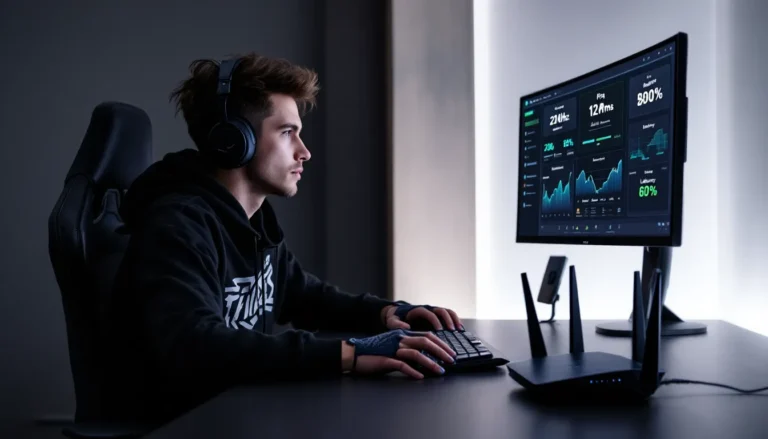
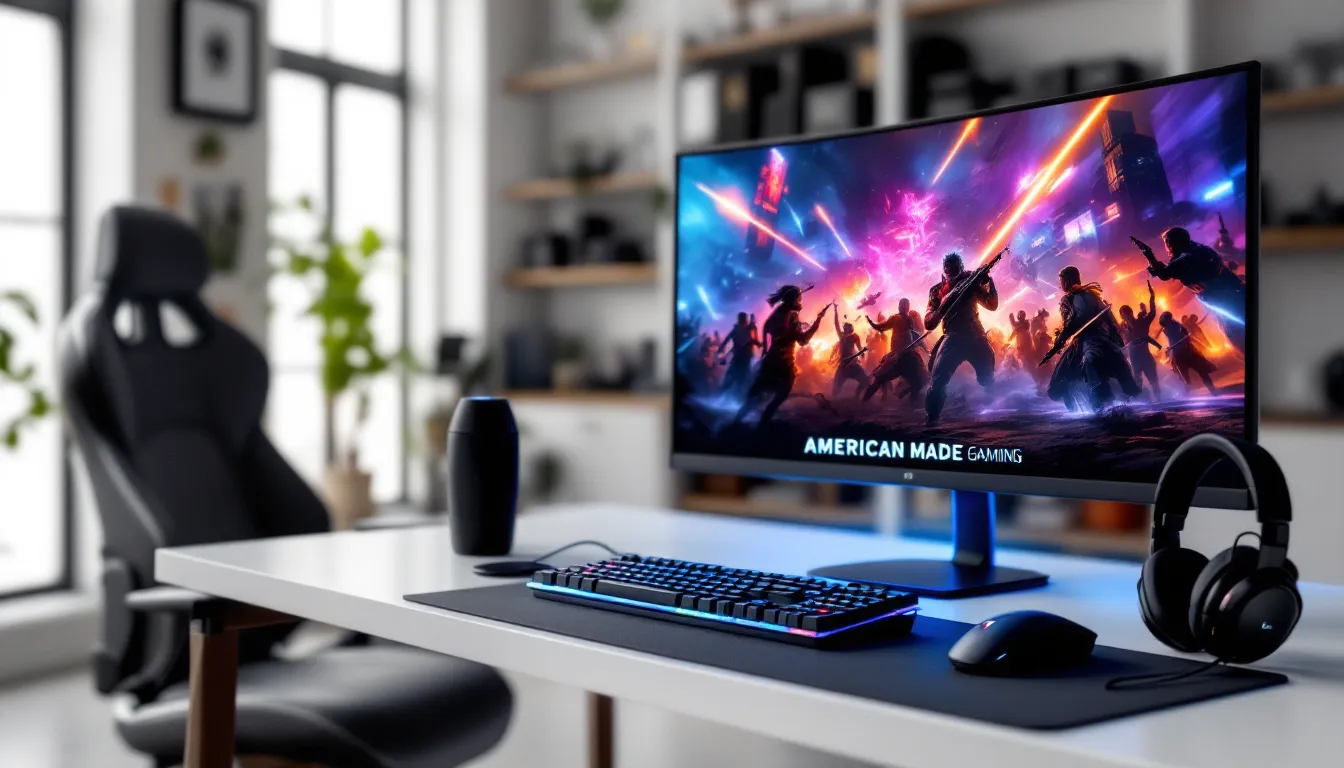

Finding the right gaming supply in America in 2026 is overwhelming, there’s literally something for every playstyle, budget, and platform. Whether you’re hunting for a 360Hz monitor to dominate competitive shooters, hunting for an ergonomic chair to survive 12-hour sessions, or just looking to upgrade from your ancient peripherals, the American gaming market has exploded with options. The supply chain has stabilized after years of GPU shortages and controller scarcity, and now the challenge isn’t availability, it’s knowing what actually matters and where to find the best value. This guide cuts through the noise and walks you through everything from basic peripherals to cutting-edge esports gear, with practical advice on where to shop and how to spot a deal that isn’t a gimmick.
Key Takeaways
- American gaming supply has stabilized after years of GPU shortages and controller scarcity, offering more choice and competitive pricing than ever before in 2026.
- The gaming supply market now prioritizes ergonomics and modularity, with features like hot-swap keyboards, adjustable gaming chairs, and customizable peripherals becoming industry standard.
- Smart shopping for gaming supplies means prioritizing high-impact purchases (monitors, input devices, chairs, headsets) over cosmetic upgrades, and buying previous-generation gear during seasonal sales for maximum savings.
- Response time and comfort are more important than raw specs—a 1440p 144Hz monitor or entry-level mechanical keyboard performs nearly identically to premium models for most casual gamers.
- Online retailers like Amazon and Newegg dominate the gaming supply landscape, but testing items in-store at Best Buy or Micro Center before purchasing is valuable for comfort-dependent equipment like chairs and monitors.
- Emerging gaming supply categories like VR headsets, esports-grade equipment, and portable gaming devices represent the industry’s future, with professional-grade gear trickling down to consumer products and setting new performance standards.
Understanding the American Gaming Supply Market
Growth and Trends in Gaming Hardware Retail
The American gaming supply market has grown into a multi-billion-dollar industry, fueled by streaming, esports growth, and casual gaming becoming normalized across all age groups. In 2025-2026, the market saw a shift toward premium peripherals and ergonomic products, people are willing to spend on gear that reduces fatigue during long sessions. RGB lighting stabilized from being an absolute gimmick to becoming a legitimate preference, though substance over aesthetics is the consensus among competitive players.
One major trend is the rise of modular and customizable equipment. Gaming chairs now come with adjustable lumbar support and armrests rated by ergonomic engineers. Keyboards feature hot-swap switches, allowing users to swap mechanical switches without soldering. Mice have programmable buttons tied to in-game macros. This modularity appeals to both casual gamers who want simplicity and professionals who need precision.
Supply chain resilience has improved dramatically. GPU availability returned to normal in 2024, and peripheral manufacturers ramped up production to meet demand. Prices have normalized, you won’t find GPU shortages or controller scarcity like 2020-2022, which means competition is driving innovation and lower prices.
Key Players and Retailers in the US Gaming Industry
The American gaming supply landscape includes major retailers like Best Buy, Amazon, Newegg, and GameStop, each with distinct advantages. Best Buy has physical locations for hands-on testing and same-day pickup. Amazon dominates bulk purchasing and standard items. Newegg caters to PC builders with detailed spec information and competitive pricing. GameStop has pivoted to esports and gaming lifestyle products.
Specialized retailers like Corsair, ASUS, Razer, and SteelSeries operate direct-to-consumer channels with exclusive products and warranty benefits. These manufacturers often offer bundle deals and seasonal promotions worth tracking. Regional retailers like Micro Center provide expert staff and local availability.
The marketplace has also fragmented, smaller retailers focused on specific niches (retro gaming supplies, budget peripherals, esports equipment) have gained traction through social media and Discord communities. This fragmentation actually benefits gamers because competition keeps prices honest and forces innovation.
Essential Gaming Peripherals and Equipment to Know
Gaming Monitors and Displays
Gaming monitors are the foundation of a good setup, and the market in 2026 is far more nuanced than “higher refresh rate = better.” Response time, panel type (IPS vs. VA vs. TN), resolution, and size all matter depending on your game and playstyle.
Refresh Rate & Resolution Trade-offs:
- 1440p 144Hz: The sweet spot for most gamers. Delivers visual clarity while maintaining high frame rates on modern GPUs.
- 1080p 240Hz+: Ideal for competitive shooters (CS2, Valorant) where input response matters more than pixel density.
- 4K 60Hz: Best for single-player, narrative-driven games where you’re not chasing frame rates.
- Ultrawide (3440×1440): Offers immersive visuals for strategy, simulation, and single-player games.
Panel technology matters too. IPS panels offer better color accuracy and viewing angles, better for creative work and immersion. VA panels provide superior contrast. TN panels have the fastest response times historically, though modern IPS panels have caught up to 1ms or 0.5ms. Gamers focused on competitive multiplayer often prefer faster response times over color accuracy.
According to independent testing at RTINGS, gaming monitor response time and motion clarity correlate directly with perceived smoothness in fast-paced games. A 27-inch 1440p 144Hz monitor sits between $250-$400. Top-tier 240Hz models run $400-$700.
Keyboards, Mice, and Input Devices
Input devices are where feel becomes non-negotiable, you can’t comp your way past a setup that feels wrong. The mechanical keyboard market has matured significantly, and the days of one-size-fits-all membrane boards are gone.
Mechanical Keyboards:
Switch type determines everything, linear switches (smooth, fast) suit competitive games: tactile switches (bumpy feedback) appeal to people who like confirmation: clicky switches are loved by typists but can drive teammates insane in voice comms. Hot-swap boards let you experiment. Quality build (aluminum frame, stabilized spacebar, layered PCB) prevents rattle and flex. Programmable per-key RGB is standard at the mid-tier and up.
Gaming Mice:
The ergonomic shape matters more than most people realize. Right-hand, left-hand, ambidextrous designs fit different grip styles (palm, claw, fingertip). Sensor technology has converged, modern optical sensors (PMW3389, PixArt PMW3610) deliver sub-1mm accuracy. The real differentiators are:
- Weight: Lighter mice (60-75g) feel snappier: heavier mice (100g+) provide stability. Preference is split.
- DPI and polling rate: 16,000 DPI is standard: 8,000 Hz polling rate is competitive standard for fighting and shooting games.
- Build quality: Durability matters on $60+ mice: cheap mice develop double-click issues within months.
Mice range from $25 for entry-level to $80 for premium esports-focused models. Keyboards vary from $50 (membrane) to $200+ (high-end mechanical).
Headsets and Audio Equipment
Audio is massively underrated in gaming. A good headset improves game sense, you can pinpoint enemy footsteps, direction of gunfire, and environmental cues with precision. Yet many gamers cheap out here.
Headset vs. Separate System:
A decent gaming headset ($80-$150) combines microphone, comfort, and decent drivers. Separates (external DAC + high-quality headphones + condenser mic) offer superior audio fidelity but cost $200+. For competitive gaming, a dedicated headset is more practical. For single-player or streams, separates shine.
Key specs:
- Driver size: 40mm is standard: 50mm drivers offer slightly richer bass but can muddy directional sound.
- Microphone: Noise cancellation and cardioid pickup reduce background noise. USB connection bypasses onboard audio and often improves clarity.
- Soundstage: Important for positional audio in shooters. Closed-back headsets isolate sound: open-back offer wider soundstage but leak audio to others.
Testing from TechRadar shows gaming-specific headsets consistently outperform generic audio headphones in spatial accuracy. Popular models include SteelSeries Arctis, HyperX Cloud, and Corsair Virtuoso, all available at major retailers.
Gaming Chairs and Ergonomic Accessories
A gaming chair isn’t a luxury, it’s injury prevention. You’re sitting for hours at a time, and a cheap chair will leave your back, neck, and shoulders screaming.
What matters in a gaming chair:
- Lumbar support: Adjustable and firm. Your lower back is where fatigue hits fastest.
- Armrest quality: Fixed or 3D-adjustable. Bad armrests force awkward shoulder positioning.
- Seat depth and width: Should accommodate your frame without restricting blood flow.
- Tilt mechanism: Recline function should be smooth and lockable at multiple angles.
- Material: PU leather is durable and easy to clean but can get hot. Mesh breathes better but shows stains faster.
Reputable brands include Secretlab, Herman Miller Gaming, and NZXT Flow. Budget options from DXRacer, AKRacing, and Corsair range $200-$400. High-end chairs (Secretlab Titan, Herman Miller Aeron) cost $1,000+, but warranty and durability justify the cost for people who game 4+ hours daily.
Don’t forget secondary ergonomic gear: monitor stands (proper height prevents neck strain), desk pads, wrist rests, and footrests all reduce strain during sessions.
Console and PC Gaming Supplies
Current-Generation Console Accessories
PS5 and Xbox Series X/S have stable accessory ecosystems now, with supply no longer an issue. The key is understanding what actually improves your experience versus marketing fluff.
PS5 Essentials:
- Controller (DualSense): The stock controller is excellent but expensive ($75 MSRP). Third-party alternatives like 8BitDo and PowerA offer cheaper options ($30-$50) with customizable buttons.
- Extended storage: The PS5 has a single M.2 slot: adding a 1TB NVMe SSD expands library space and eliminates game deletion management.
- Charging dock: Official or third-party, worth $20-$30 to avoid battery degradation from constant charging.
- VRR and 120fps support: Standard features now: just need compatible TV and HDMI 2.1 cable.
Xbox Series X/S Essentials:
- Game Pass: Not a supply item, but the subscription service fundamentally changes how people approach the platform (1,000+ games).
- Quick Resume: Leverages the SSD to suspend multiple games simultaneously. Makes accessories like external USB storage less critical than on PS5.
- Controller options: Stock Xbox controller is solid ($70). Elite Series 2 ($180) adds customization and replaceable stick modules.
Console supplies don’t change much year-to-year. The advantage of waiting is that older-generation accessories drop in price significantly once new hardware launches.
PC Gaming Components and Upgrades
PC gaming supplies span a broader range because the platform is modular. Whether you’re building from scratch or upgrading, priorities differ by budget and goals.
GPU (Graphics Card):
The most impactful component for gaming performance. In early 2026, the market settled around:
- NVIDIA RTX 4070 Super (~$600): 1440p ultra settings, 144+ fps in most AAA titles.
- RTX 4080 Super (~$1,000): 4K gaming, competitive esports titles at 240+ fps.
- AMD RX 7700 XT (~$400): Budget-friendly: performs similarly to RTX 4070 at 1440p.
Choose based on monitor resolution and target frame rate, not raw TFLOPS. Reviews from Tom’s Hardware provide frame-by-frame benchmarks in actual games, the gold standard for GPU comparisons.
CPU (Processor):
Modern Intel (13th/14th Gen Core) and AMD (Ryzen 7000 series) CPUs are overkill for gaming at 1440p, a mid-tier CPU paired with a good GPU beats a high-end CPU with a weak GPU. Prioritize stability and core count (8+ cores for 2026 standards).
RAM and Storage:
- RAM: 32GB is the new standard (16GB is minimum). DDR5 is standard in new builds: DDR4 still performs fine.
- Storage: 1TB NVMe SSD minimum for OS and two AAA games. Expansion beyond 2TB is cheap now ($30-$50 per TB).
Power Supply:
Budget $100-$200 for a reliable 80+ Gold certified unit. Cheap PSUs fail catastrophically and can damage other components, not worth the savings.
Case and Cooling:
Cases range from $50 budget enclosures to $300+ high-end designs. Airflow matters: positive air pressure (more intake than exhaust fans) reduces dust. CPU coolers: Mid-range air coolers ($40-$80) outperform most liquid coolers ($100-$150) at a fraction of the cost and complexity.
Mobile Gaming and Portable Gaming Supplies
Controllers and Mobile Gaming Peripherals
Mobile gaming has matured beyond simple touch controls. Dedicated mobile controllers and accessories have become standard for serious mobile gamers and esports players.
Mobile Controllers:
- Backbone One (~$100): Clips to iPhone or Android, feels like a high-quality console controller. Seamless integration with cloud gaming services (Xbox Game Pass, PlayStation Remote Play).
- 8BitDo Ultimate Bluetooth Controller (~$60): Wireless, highly customizable, works across mobile, PC, and Switch.
- Razer Kishi V2 (~$80): Compact design, low latency. Excellent for portable competitive gaming.
Mobile controller latency matters less than console controllers but still matters in competitive games, look for 30ms or lower input lag.
Screen Protectors and Cooling:
Mobile gaming generates heat: some players use external clip-on coolers ($20-$40) for extended sessions. Tempered glass screen protectors ($10-$20) prevent accidental damage during intense gameplay.
Phone Stands and Mounts:
Basic stands cost $15-$30. Premium versions with adjustable angles and stable bases are worth the upgrade for streaming or table gaming.
Power Solutions and Portable Devices
Portable gaming requires consistent power. A good power solution extends session time and protects expensive devices.
Portable Chargers (Power Banks):
- Capacity: Measured in mAh or Wh. A 20,000mAh power bank fully charges a phone 3-5 times.
- Fast charging: Look for USB-C Power Delivery (PD) 30W+ for tablets and 65W+ for laptops.
- Weight: Portable chargers under 300g feel pack-friendly: over 500g gets heavy on longer trips.
Quality brands like Anker, Belkin, and RAVPower offer reliable options ($30-$80 depending on capacity). Avoid ultra-cheap knock-offs, battery failures can damage your device.
Portable Gaming Devices:
Handhelds like Nintendo Switch OLED, Steam Deck OLED, and ASUS ROG Ally have established market positions. Each targets different use cases:
- Switch OLED: Nintendo exclusives, local multiplayer, casual gaming. Best screen on the market at 7.3 inches.
- Steam Deck OLED: Windows games, massive library through Steam. Requires more power management and setup.
- ROG Ally: Windows gaming, compact form factor. Shorter battery life than competitors.
Accessories (carrying cases, screen protectors, stand docks) are essential for portable devices, budget $30-$60 for solid accessories. Official docking stations run $100+: third-party alternatives often perform identically at half the cost.
Cooling and Protection:
Device-specific cooling clips ($20-$40) prevent thermal throttling during extended sessions. Protective cases ($15-$50) prevent screen and chassis damage, essential for expensive devices like the Steam Deck.
Where to Buy Gaming Supplies in America
Online Retailers and Marketplaces
Amazon remains the dominant player for breadth and convenience. Fast shipping (Prime), easy returns, and price matching make it the default for most purchases. Downsides: counterfeit products slip through occasionally, and pricing isn’t always competitive compared to specialists.
Newegg dominates for PC components and hardcore gamers. Detailed specifications, user reviews, and price history tools help with informed decisions. Return policies are stricter than Amazon, but customer service is responsive. Excellent for GPU comparisons and exotic components.
Best Buy offers same-day pickup (GameStop integration), hands-on testing, and Geek Squad support. Price matching against Amazon and Newegg applies. In-store experience varies by location, some Best Buys have knowledgeable staff: others don’t.
GameStop has pivoted toward lifestyle and esports products. Stock varies by location, but online ordering with local pickup is reliable. Return windows (14-30 days) are industry standard.
Manufacturer Direct (Corsair, ASUS, Razer, SteelSeries): Buying direct often provides warranty benefits, exclusive colorways, and bundle deals. Prices are rarely discounted compared to retailers, but exclusivity and support justify it for enthusiasts.
Specialized retailers: Mechanical keyboard communities favor sites like KBDfans, Drop, and Keychron. Each has specific advantages (customization, exclusive keycaps, community engagement).
Physical Retail Locations
Best Buy remains the primary brick-and-mortar option for most gamers. Display units of monitors, headsets, and chairs let you test before buying, invaluable for comfort and preference decisions. Stock reflects regional demand: urban areas carry more inventory.
Micro Center (regional, midwest and scattered locations) caters to PC builders with deep component selection, knowledgeable staff, and price matching. Their open-box sections often offer 10-20% discounts on returns. If you’re near one, it’s worth a visit for component research.
GameStop stores are declining, but flagship locations in major cities still carry decent peripherals and esports products. Browsing ergonomic chairs in-store before purchasing online is valuable.
Walmart and Target stock entry-level gaming gear (budget controllers, basic headsets, RGB lights) but lack depth. Useful as emergency supply runs, but not primary sources for serious purchases.
Specialty Shops and Niche Retailers
Local computer shops, mom-and-pop gaming cafes, and esports lounges often stock niche products and support local communities. Building relationships with staff provides personalized recommendations and insider knowledge of upcoming sales.
Esports teams and organizations sometimes operate merchandise stores with exclusive gear and team-branded products. Supporting esports ecosystems directly benefits the competitive scene you love watching.
International retailers (Aliexpress, Taobao) offer budget options on peripherals but carry shipping delays (2-6 weeks) and warranty complications. Avoid unless you’re patient and comfortable with minimal support.
Second-hand markets (Facebook Marketplace, OfferUp, eBay) have legitimate deals on gently used gear, especially high-end chairs and monitors. Inspect carefully and prioritize local meetups over shipping to avoid receiving damaged items. Return policies are non-existent, so verify condition before payment.
Budget Strategies and Smart Shopping Tips
Finding Quality Supplies on a Budget
Quality gaming gear doesn’t require unlimited spending. Strategic choices stretch a limited budget without sacrificing core performance.
Prioritize impact: Not all upgrades matter equally. A $100 monitor upgrade from 60Hz to 144Hz is transformative: a $50 RGB pad upgrade is cosmetic. Identify components that directly affect your gaming experience (monitor, mouse, chair, headset) and allocate budget accordingly.
Buy entry-level in competitive categories: Mechanical keyboards, gaming mice, and headsets have standardized among brands. A $50 mechanical keyboard and $30 gaming mouse perform nearly identically to $150+ premium versions for casual gamers. Save premium purchases for items where comfort (chairs, monitors) requires personal testing.
Leverage refurbished and open-box: Retailer websites often sell returned items as “like new” at 10-30% discounts. Open-box monitors and chairs that were display units or minor returns are identical in function to new items. Warranty may be reduced (1 year vs. 3), so verify before purchasing.
Use price tracking tools: CamelCamelCamel (Amazon price history), Honey, and RetailMeNot track historical prices and alert on drops. A $150 headset might have sold for $100 during sales, patience pays off.
Buy previous-generation gear: Last year’s RTX 4070 performs identically to the current model at $100-$200 cheaper. Peripherals (keyboards, mice, chairs) have minimal generational differences. Waiting 6-12 months after new releases nets significant savings.
Seasonal Sales and Discount Timing
American retailers follow predictable sale patterns. Smart timing maximizes discounts without sacrificing supply availability.
Black Friday and Cyber Monday (late November): Largest discounts of the year. Electronics, especially monitors and peripherals, see 20-40% reductions. The downside: popular items sell out quickly, and return windows reset after the holidays. Shop early or pre-plan specific products.
Prime Day (mid-July): Amazon’s exclusive event offers 15-30% discounts on selected items. Competition for hot deals is fierce: setting up price watches weeks in advance helps.
New product launches: Previous-generation gear drops when manufacturers release successors. GPU launches (typically January, August) trigger monitor and peripheral sales as older stock clears. Waiting 2-3 weeks after a major gaming console or GPU launch nets discounts on complementary supplies.
Back-to-school (August-September): Retailers bundle gaming laptops and peripherals at discount. Not as aggressive as Black Friday but still substantial.
Tax refund season (February-April): Retailers offer moderate discounts on gaming categories, anticipating refund spending.
End-of-quarter clearance (March, June, September, December): Retailers liquidate overstocked items to meet quarterly targets. Less predictable than scheduled sales, but good timing to find odd discounts on random products.
Newsletter signups and coupon codes: Manufacturers and retailers send exclusive discount codes to email subscribers. Before checking out anywhere, search “[retailer name] coupon code 2026”, easy 5-15% savings.
Emerging Technologies and Future Supplies
VR and Advanced Gaming Experiences
VR gaming in 2026 has matured beyond novelty. Meta Quest 3S, PlayStation VR2, and high-end PC VR (Valve Index, HTC Vive Pro 2) represent distinct tiers targeting different budgets and commitment levels.
Meta Quest 3S (~$300): Standalone VR (no PC required), excellent game library, improving hand-tracking. Accessibility drives adoption among casual audiences. Drawbacks: lower resolution than tethered headsets, limited battery life (2-3 hours).
PlayStation VR2 (~$550): Exclusive to PlayStation 5, exceptional visuals, high-quality exclusive titles. Requires PS5 ($500), making the combined cost substantial. Best for PlayStation ecosystems and living-room VR.
High-end PC VR (Valve Index $999, HTC Vive Pro 2 $1,400): Superior visual fidelity, modding community, extensive library. Requires high-end PC ($1,500+) to run properly. Reserved for enthusiasts and developers.
VR accessories: Motion controllers ($50-$200), haptic gloves ($200+), treadmills ($3,000+), and wireless adapters ($300+) expand immersion but aren’t essential. Controllers and a headset deliver 90% of the experience: add accessories based on genre preference.
VR gaming is still niche, demand is real but hasn’t reached mass-market adoption. 2026-2027 might shift adoption curves as AI-driven content and social VR platforms mature.
Esports Equipment and Professional-Grade Gear
Esports players demand equipment tuned for competitive advantage. This market drives innovation in precision, durability, and customization.
Tournament-grade monitors: 240Hz+ displays with 1ms response times dominate esports setups. Models like ASUS PG258Q and Dell S2721DGF ($400-$600) are industry standard in competitive FPS scenes. Color accuracy matters less than responsiveness: TN panels are still favored even though IPS improvements.
Pro-grade mice: Esports players obsess over sensor quality, weight, and grip consistency. Ultra-light mice (50-60g) from Finalmouse and superlight variants from Logitech command premium prices ($60-$140) because fractions of grams affect flick aim and stamina during tournaments.
Mechanical keyboards for esports: 60% or 75% keyboard layouts dominate competitive scenes because compact designs reduce hand travel distance. Optical mechanical switches (0.1ms activation) are marginally faster than traditional mechanical switches, the difference is measurable but negligible for most players. Sponsorship and personal preference drive equipment choices more than spec sheets.
Esports chairs: Professional players upgrade to premium ergonomic seats (Secretlab Titan, Herman Miller Aeron Gaming) because tournament schedules demand 8+ hours per day. Warranty, build quality, and long-term durability justify $800-$1,500 prices compared to budget alternatives that deteriorate in 2-3 years.
Team and organization sponsorships: Professional esports teams partner with manufacturers (Samsung, Intel, HyperX, SteelSeries) for exclusive gear and discount programs. Team-signed merchandise carries premium prices but supports competitive ecosystems.
The esports equipment market drives innovation that trickles down to consumer products. Competitive standards eventually become enthusiast expectations, then casual standards. Professional-grade gear signals reliability and performance gains, even if casual players don’t exploit those margins.
Conclusion
The American gaming supply market in 2026 is mature, competitive, and finally stable after years of scarcity and volatility. You have more choice, better availability, and lower prices than any previous generation, but that abundance creates decision paralysis. The key is matching your spending to impact.
Focus on the supplies that directly affect your gaming experience: a good monitor, responsive input devices, comfortable seating, and audio that lets you hear the game. Skip the RGB lighting, branded merchandise, and marketing hype. Buy previous-generation gear and wait for seasonal sales if you’re budget-conscious. Test items in-store when possible, especially chairs and monitors, because comfort is subjective and expensive to regret.
The supply chain is reliable now, so there’s no pressure to impulse-buy or overpay out of fear of scarcity. Be patient, do your research, and invest in the equipment that serves your specific playstyle. Whether you’re casual, competitive, or somewhere in between, American retailers have you covered.